
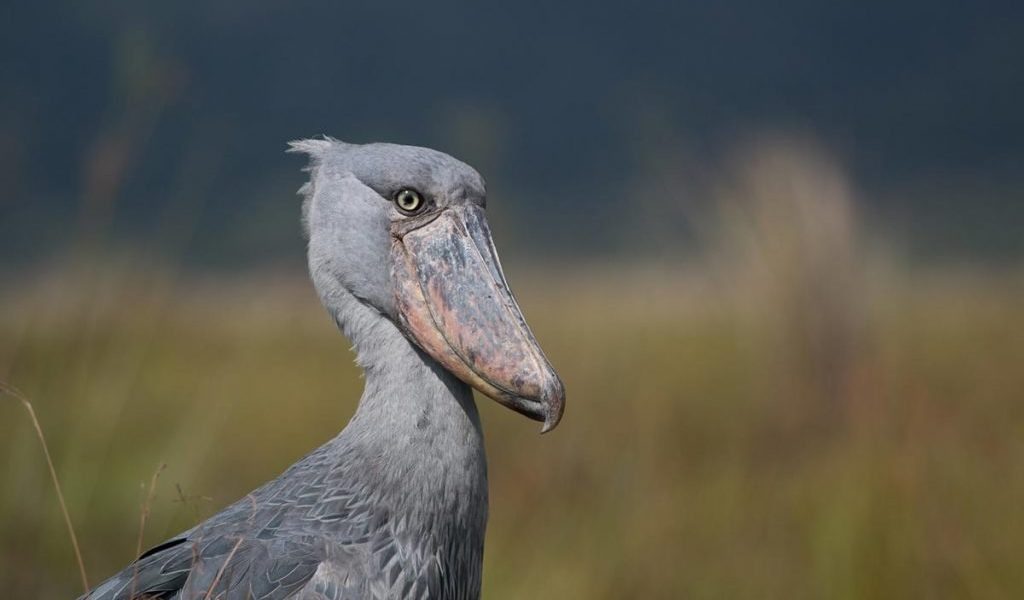
Mabamba Shoebill Safari Uganda – Key Facts about Shoebill Stork
What is a Shoebill Stork?
The shoebill, scientifically known as (Balaeniceps rex), is one of the most remarkable and rare birds Uganda. Often referred to as the “whale-headed stork,” this prehistoric-looking bird is famous for its enormous shoe-shaped bill, which it uses to hunt lungfish and other aquatic prey. Standing over one meter tall, the shoebill has a grey-blue plumage and a powerful, motionless hunting style that allows it to blend perfectly into swampy vegetation. Its behaviour is just as unique as its appearance, often remaining still for long periods before striking with incredible speed. Today visit our page and lets talk the Mabamba Shoebill Safari Uganda.
Mabamba Shoebill Safari Uganda
A shoebill safari to Mabamba Wetland is one of the most rewarding birding experiences in Uganda. Located along the shores of Lake Victoria near Entebbe, Mabamba is widely regarded as the most reliable location to see shoebills in the country. The wetland is a Ramsar-listed site and supports an impressive diversity of birdlife, making it a top destination for both amateur and professional birdwatchers.
A typical Mabamba shoebill excursion involves gliding through narrow papyrus channels in a traditional canoe or a small motorized boat. As the sun rises, the wetlands come alive with bird calls, and experienced local guides track the shoebill in its feeding grounds. The calm environment, combined with the thrill of spotting such a rare bird, creates a truly unforgettable experience.
Best Birding Tours in Uganda
Uganda is often described as Africa’s hidden paradise for birding, hosting over 1,000 recorded bird species. A well-planned birding safari offers a variety of ecosystems ranging from wetlands to tropical rainforests and savannah plains. A visit to Murchison Falls National Park provides a chance to see shoebills in the Nile Delta alongside a wide range of savannah birds. In western Uganda, Semuliki Wildlife Reserve introduces birders to rare Central African species that are not easily found elsewhere in East Africa. Meanwhile, Ziwa Rhino Sanctuary offers a unique combination of shoebill tracking and rhino encounters, making it a diverse and exciting stop on any birding itinerary.
How to See Shoebill in Uganda
Seeing a shoebill in Uganda requires proper timing, location, and guidance. The experience is most successful when done with knowledgeable local guides who understand the bird’s movements and feeding behavior. Early morning departures increase the chances of sightings, as shoebills are more active during the cooler hours of the day. Accessing their habitat typically involves a boat ride through wetlands, where patience is rewarded with close encounters. Choosing proven locations such as Mabamba, the Nile Delta in Murchison Falls, Ziwa Rhino Sanctuary, or Semuliki Wildlife Reserve significantly improves the likelihood of a successful sighting.
Habitat of Shoebill in Uganda
Shoebills thrive in freshwater wetlands dominated by papyrus vegetation, shallow waters, and abundant fish populations. These habitats provide the perfect conditions for hunting lungfish, which form a significant part of their diet. In Uganda, such environments are found in Mabamba Wetland near Entebbe, the delta area of Murchison Falls National Park, the swampy sections of Ziwa Rhino Sanctuary, and the remote lake Albert of Semuliki Wildlife Reserve. These ecosystems are not only critical for shoebill survival but also support a wide variety of other bird species, making them essential for conservation and birding tourism.
Best Time to See Shoebill in Uganda
The best time to see Mabamba Shoebill Safari Uganda, falls within the dry seasons, particularly from June to September and from December to February. During these periods, water levels in wetlands reduce, concentrating fish and making it easier for shoebills to hunt in more open areas. This also improves visibility for visitors and allows boats to navigate more efficiently through the channels. Although shoebills can still be seen during the wet seasons, dense vegetation and higher water levels can make sightings more challenging.
The time of day also plays an important role in the success of a shoebill safari. Early morning, just after sunrise, offers the highest chances of encountering these birds as they actively search for food. Late afternoon can also provide good opportunities, though sightings are generally less predictable compared to the morning hours.
Why Choose a Shoebill Safari in Uganda
A shoebill safari in Uganda offers a rare opportunity to witness one of the most sought-after birds in the world within its natural habitat. The experience is easily accessible from Entebbe, making it ideal even for travellers with limited time. Beyond the Mabamba Shoebill Safari Uganda, Uganda’s rich biodiversity allows visitors to combine birding with other experiences such as wildlife safaris, gorilla trekking, and cultural encounters. This combination makes Uganda a truly unique destination for nature lovers and adventure seekers alike.

Comment (0)