
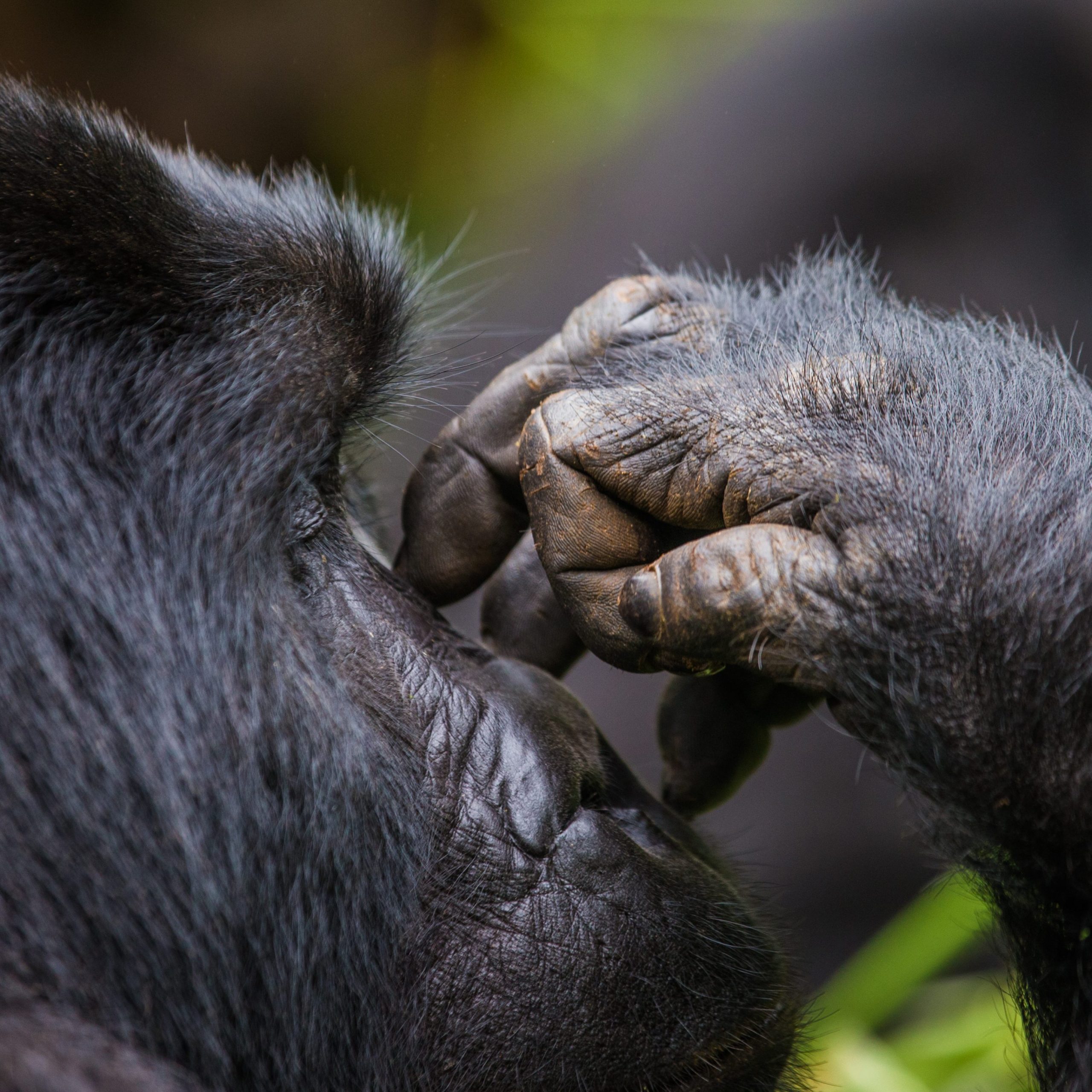
Facts about Life cycle of a mountain gorilla– A Complete Guide
Life cycle of a mountain gorilla (Gorilla beringei beringei) is one of the most fascinating and iconic primates on Earth. Found only in high-altitude forests of the Virunga Mountains and the Bwindi Impenetrable Forest, these gentle giants have a unique Life cycle of a mountain gorilla that reflects their complex biology and social structure. Understanding their life stages not only deepens appreciation for these animals but also highlights why conservation efforts are so critical.
Life cycle of a mountain gorilla – Birth and Infant Stage
Mountain gorillas are born after a long gestation period of about eight and a half months, similar to humans. A newborn gorilla typically weighs around 1.8–2 kg (about 4 pounds) and is completely dependent on its mother. In the first few months of life, infants are almost always in physical contact with their mothers, riding on their backs as they move through the forest.
The infant stage lasts from birth until about three years old. During this time, the baby learns essential survival skills by watching and mimicking its mother and other group members. Gorillas begin to walk on their own at around four to five months and start trying solid food between four and six months. Weaning usually occurs at around three years, but young gorillas often remain with their mothers for years after.
Juvenile and Adolescence
Between approximately three and six years old, gorillas enter the juvenile stage. Juveniles are more independent and explore their surroundings with curiosity. They play, wrestle, and learn important social skills from interactions with peers, which help build their physical strength and social confidence.
After the juvenile phase, gorillas move into adolescence (around six to ten years). At this stage, males called “blackbacks” if they are not yet fully mature begin to grow larger, though they haven’t developed the distinctive silver hair of mature males yet. Females reach sexual maturity around this time, usually between 7 and 10 years old, but typically do not start breeding until they are about 10–12 years old.
Adulthood and Reproduction
Full adulthood in male gorillas is marked by the development of a silver saddle of hair on the back—hence the name silverback. Males generally do not breed before 15 years old, though they may remain with their natal group or form new groups. Silverbacks lead their troop, making decisions, protecting members, and having mating access to the females under their care.
Mountain gorillas have a slow reproductive rate. Females usually give birth to a single infant every four to eight years, with only a few offspring surviving during their lifetime. This slow breeding cycle contributes to the vulnerability of the species, making every birth especially important to population growth.
Lifespan and Legacy
In the wild, mountain gorillas can live up to 35–40 years, with some individuals living longer under human care. Their extended lifespan and slow reproduction make long-term conservation essential for maintaining healthy populations. Their strong family bonds, long maternal care, and unique social dynamics make mountain gorillas one of the most remarkable primates on the planet. Every stage of their life cycle reveals both the beauty and fragility of these incredible animals. Facts about the mountain gorilla life cycle from birth and infancy to adulthood and reproduction and discover how these gentle giants grow, mature, and live in the wild.

Comment (0)